


Niti Aayog Official Views Higher Futures And Options Tax To Temper Extreme Trading
Share this article:
5 min readNiti Aayog member Arvind Virmani comments on increased Futures and Options taxation to curb extreme trading sparked significant discussion in the Indian market today. The remarks signal potential policy shifts affecting derivatives participants and market stability.
Niti Aayog Official Views Higher Futures And Options Tax To Temper Extreme Trading
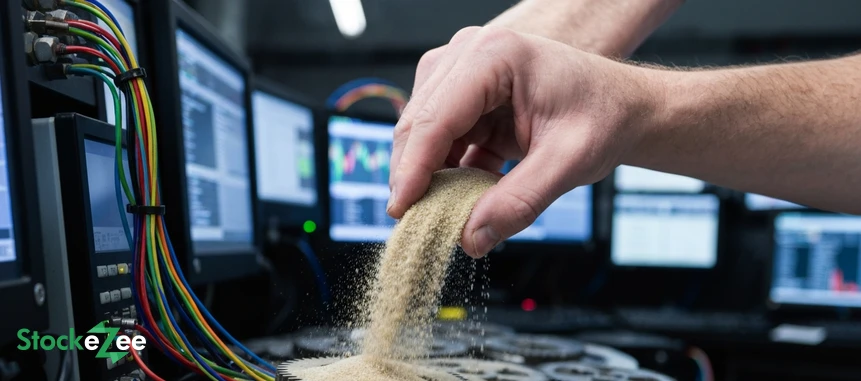
Today’s Indian market witnessed a significant discourse stemming from remarks by Niti Aayog member Arvind Virmani regarding the taxation of futures and options (F&O) trading. His commentary, likening a higher tax to 'throwing sand in the wheels' to curb extreme trading, immediately resonated across trading desks and investment forums. Given the substantial contribution of F&O to daily trading volumes on both the National Stock Exchange (NSE) and Bombay Stock Exchange (BSE), any indication of potential regulatory adjustments carries considerable weight for market participants.
The statement underscores a potential policy lean towards moderating speculative activities, prompting traders and investors to reassess future market dynamics and potential cost implications.
What Triggered the Market Reaction Today
The primary catalyst for today’s market discussion was the direct statement from Niti Aayog member Arvind Virmani. He articulated that increasing the tax on futures and options transactions would serve as a mechanism to 'throw sand in the wheels.' This analogy was explicitly used to convey the intent of ensuring that trading does not escalate to extreme levels. Coming from a key member of the Niti Aayog, a premier policy think tank of the Government of India, these comments are perceived as a signal of high-level deliberation within policy circles regarding the structure and oversight of India’s derivatives market. The underlying rationale appears to be a desire to foster greater stability and reduce excessive speculative tendencies that might contribute to market volatility.
Impact on Indian Markets and Key Sectors
Following the Niti Aayog member's remarks, the Indian market sentiment experienced a notable shift, particularly among participants active in the derivatives segment. While broad indices might not have reflected immediate sharp movements without concrete policy changes, the underlying mood turned cautious.
Within specific sectors, financial services companies, especially those heavily involved in brokerage and trading platforms offering F&O services, could face scrutiny. Any measures that potentially reduce F&O trading volumes or increase costs might influence their revenue models. Similarly, proprietary trading firms and individual traders who rely extensively on F&O for their daily operations might begin to factor in potential increases in transaction costs.
Stocks that typically exhibit high volatility and are popular in the F&O segment might see a recalibration of trading activity. Market participants are now closely monitoring whether these comments translate into concrete proposals, which could lead to an adjustment in liquidity and price discovery mechanisms within the derivatives space. The overall market perceived the comments as a signal for potential structural changes rather than an immediate, direct impact on prices.
What This Means for Traders and Investors
For traders, especially those engaged in high-frequency trading or strategies heavily dependent on derivatives, the Niti Aayog member's comments signal a need for strategic review. A potential increase in F&O transaction costs, should it materialise, could directly impact profit margins, necessitating a re-evaluation of current trading models and risk management frameworks. The discourse highlights the importance of staying abreast of regulatory developments and anticipating shifts in market conditions.
Long-term investors, conversely, might interpret such policy considerations as a move towards fostering a more stable and less speculative market environment. Reduced extreme trading could potentially lead to a market that is more reflective of underlying economic fundamentals rather than driven by short-term speculative surges. However, they too will need to monitor how potential changes might affect overall market liquidity and investor participation. Both segments of market participants are now acutely aware of the potential for evolving regulatory landscapes impacting market structure.
Market Outlook Going Ahead
Looking ahead, the market will be closely watching for any further official statements or concrete steps from policymakers regarding F&O taxation or regulation. The comments from the Niti Aayog member have initiated a public dialogue, and participants will monitor if these preliminary thoughts evolve into formal policy discussions or proposals within the government.
Key areas of focus will include potential impacts on derivatives volumes and open interest, as market participants adjust their strategies in anticipation of or response to potential cost increases. Any significant alteration to the cost structure of F&O trading could lead to a reallocation of capital, with some trading activity potentially shifting to the cash market or towards less tax-intensive derivatives. Market liquidity, particularly in thinly traded F&O contracts, will also be a point of observation, as higher costs could deter participation. The broader market sentiment will remain sensitive to how the government balances revenue generation, market stability, and fostering a robust trading environment.
Conclusion
Today's remarks from Niti Aayog member Arvind Virmani about potentially higher taxes on futures and options trading represent a significant talking point for the Indian stock market. His view that such measures could temper extreme trading has put market participants on alert, signaling a potential policy direction aimed at moderating speculative activities within the derivatives segment. While no immediate policy changes were announced, the discussion underscores the continuous governmental focus on market stability and structure. Traders and investors are now tasked with carefully monitoring future policy dialogues and their potential implications for trading costs, market liquidity, and overall participant behaviour in one of the world's most active derivatives markets. The ongoing conversation highlights the dynamic interplay between policy intent and market functioning, requiring vigilance from all stakeholders.