


Oil Surge and Strait of Hormuz Fears Impact Indian Equities
Share this article:
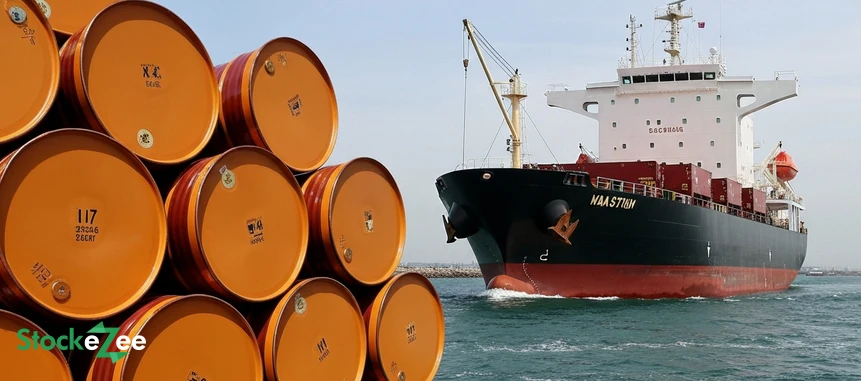
8 min readOil prices surged 12 percent due to US Israel strikes on Iran, sparking Strait of Hormuz disruption fears. This poses a significant risk to India's crude imports, leading to a cautious outlook for Indian equity markets, with Nifty and Bank Nifty trading lower.
Global crude oil markets have witnessed a significant surge, with prices moving UP 12% following reports of US-Israel strikes on Iran. This escalation has ignited fears of major disruptions in the critical Strait of Hormuz, a vital chokepoint for global oil shipments. The immediate market reaction reflects heightened geopolitical risk premium being priced into energy commodities. Concurrently, the Indian equity benchmarks are trading lower, with the NIFTY 500 at 22835.95, down 330.90 points or 1.43%, and the NIFTY BANK at 59839.65, registering a decline of 689.35 points or 1.14%.
This situation poses a considerable risk to India, an economy heavily reliant on crude oil imports, a large portion of which transits through the Strait of Hormuz. The disruption fears and escalating attacks between Iran and Israel, which have already damaged tankers and interrupted crucial shipments from the Middle East, directly impact India's energy security and macroeconomic stability. Traders are closely monitoring the evolving geopolitical landscape for further cues on oil price trajectory and its broader implications for domestic markets.
Live Market Snapshot: Where Indices and Stocks Stand Today
As of the latest market data, Indian equity indices are reflecting a cautious sentiment amidst global developments:
- NIFTY 500: Opened at 22547.00, touched a high of 22992.35, and a low of 22539.65. The last traded price stands at 22835.95, marking a change of -330.90 points, or a -1.43% decline from its previous close of 23166.85.
- NIFTY BANK: Commenced trading at 59204.30, reached an intraday high of 60177.50, and a low of 59148.00. The last traded price is 59839.65, indicating a change of -689.35 points, or a -1.14% decrease from its previous close of 60529.00.
No specific stock data was available in the live market snapshot for individual stock movements.
Primary Market Trigger: What the Data Shows
The primary market trigger for the observed 12% surge in oil prices is the escalating geopolitical tension stemming from US-Israel strikes on Iran. This has directly fueled fears of significant disruption to crude oil shipments through the Strait of Hormuz. For traders, this translates into an immediate supply-side shock premium being added to crude benchmarks. The mechanism is straightforward: any perceived threat to the free flow of oil through this critical maritime passage, which accounts for a substantial portion of global seaborne oil trade, leads to an immediate repricing of risk. The reported damage to tankers and the disruption of crucial shipments from the Middle East serve as tangible evidence of this escalating risk, prompting a rapid upward adjustment in oil futures. The absence of a specific historical pattern for this exact geopolitical configuration means traders are reacting to the immediate, unmitigated risk of supply constriction rather than relying on established precedents.
Sector Intelligence: Winners and Headwinds
While the provided intelligence does not explicitly list positive or negative sectors, the implications of a 12% oil price surge for an oil-importing nation like India are clear. Direct positive sectors are not immediately apparent, as higher crude prices generally act as a net negative for the broader economy.
- Sectors Facing Headwinds: The most immediate impact will be felt by sectors with high energy input costs or those sensitive to consumer discretionary spending.
- Oil Marketing Companies (OMCs): Companies involved in refining and marketing petroleum products will face margin pressure if they cannot fully pass on the increased crude costs to consumers, or if government intervention limits price adjustments.
- Aviation: Airline operators are highly susceptible to rising crude prices, as jet fuel constitutes a significant portion of their operating expenses. Higher fuel costs directly erode profitability.
- Logistics and Transportation: Companies in this sector will experience increased operational costs due to higher diesel prices, potentially impacting freight charges and overall supply chain economics.
- Chemicals and Fertilizers: Many chemical and fertilizer manufacturers use crude oil derivatives or natural gas as key feedstocks. Elevated crude prices will lead to higher input costs, affecting their margins.
- Manufacturing: Across various manufacturing segments, higher energy costs for production and transportation will compress profit margins and could lead to inflationary pressures.
Stocks on the Radar
Given the absence of specific stock data in the provided intelligence, the analysis focuses on the likely directional impact on stock categories within the affected sectors.
- Stocks Likely to Face Selling Pressure:
- Oil Marketing Companies (OMCs): Stocks like Indian Oil Corporation, Bharat Petroleum Corporation, and Hindustan Petroleum Corporation could face selling pressure due to concerns over refining margins and potential under-recoveries.
- Aviation Stocks: Companies such as IndiGo (InterGlobe Aviation) and SpiceJet are likely to see negative sentiment as higher jet fuel prices directly impact their operational profitability.
- Logistics Companies: Stocks of major logistics players could experience headwinds due to increased fuel expenses impacting their cost structures.
- Tyre Manufacturers: Companies like MRF, Apollo Tyres, and Ceat, which use crude derivatives as raw materials, may face margin compression.
Conversely, while no specific stocks are identified for buying interest, in a scenario of sustained high oil prices, domestic upstream oil producers might theoretically benefit from higher realizations. However, this benefit is often weighed against government policies and windfall taxes, making the direct positive impact less straightforward for Indian equity traders.
Historical Precedent and Pattern Recognition
The current geopolitical trigger, involving US-Israel strikes on Iran and the immediate threat to the Strait of Hormuz, presents a unique and statistically rare event. The intelligence indicates no specific historical pattern for this exact confluence of events. However, traders can draw parallels from past episodes of significant oil price spikes and their broader impact on the Indian economy and equity markets. Historically, sharp increases in crude oil prices have typically led to:
- Inflationary Pressures: Higher crude prices feed into domestic fuel costs, impacting transportation, manufacturing, and ultimately consumer prices, leading to broader inflation.
- Current Account Deficit (CAD) Widening: As a major oil importer, India's import bill swells with rising crude prices, exacerbating the CAD and putting pressure on the Indian Rupee.
- Interest Rate Hikes: To combat inflation, the Reserve Bank of India might be compelled to adopt a tighter monetary policy, potentially leading to higher interest rates, which can dampen economic growth and corporate earnings.
- Equity Market Volatility: Indian equity markets have historically reacted negatively to sustained periods of high oil prices, often witnessing corrections across broad indices as investor sentiment sours due to macroeconomic concerns.
The novelty of this specific trigger implies that the market's reaction might be more pronounced and less predictable in the short term, as there isn't a clear playbook from previous similar events to follow regarding duration, depth, or recovery patterns.
Trader Implication: Reading the Next 1–5 Sessions
The trader implication is clear: expect continued upward pressure on oil prices due to ongoing disruption fears, with a potential for prices to top $100. The next session bias for crude oil is unequivocally BULLISH. For the broader Indian equity market, this translates into significant headwinds. The NIFTY 500, currently at 22835.95, and the NIFTY BANK, at 59839.65, are likely to remain under pressure. Key support levels for the NIFTY 500 around its intraday low of 22539.65 will be crucial to monitor. A breach could signal further downside. Similarly, for the NIFTY BANK, the intraday low of 59148.00 serves as an important psychological and technical level. The reasoning for this cautious outlook on Indian equities stems from the direct correlation between higher crude prices and macroeconomic instability, including inflation, a widening current account deficit, and potential monetary policy tightening. Traders should anticipate increased volatility and a defensive posture in sectors most exposed to energy costs.
Key Takeaways for Market Participants
- Oil Price Trajectory: Expect continued upward pressure on crude oil, with a strong BULLISH bias for the next session, driven by Strait of Hormuz disruption fears.
- Geopolitical Risk Premium: The market is pricing in a significant geopolitical risk premium, indicating sustained volatility in energy markets.
- Indian Macroeconomic Headwinds: India faces considerable risk due to its high crude oil import dependency, potentially leading to inflation and a widening Current Account Deficit.
- Sectoral Impact: Sectors like Oil Marketing Companies, Aviation, Logistics, and Chemicals are likely to face significant margin pressure and selling interest.
- NIFTY 500 Support: Monitor the NIFTY 500's intraday low of 22539.65 as a critical support level; a break could signal further market weakness.
- NIFTY BANK Levels: The NIFTY BANK's intraday low of 59148.00 is a key level for traders to watch for potential downside continuation.
- Increased Volatility: Traders should prepare for heightened market volatility across Indian equities as global geopolitical tensions evolve.